
Exhibition at Yeovil Art Space
17 October – 19 November / Open Times Wed – Fri, 12 – 4 & Sat, 11 – 4
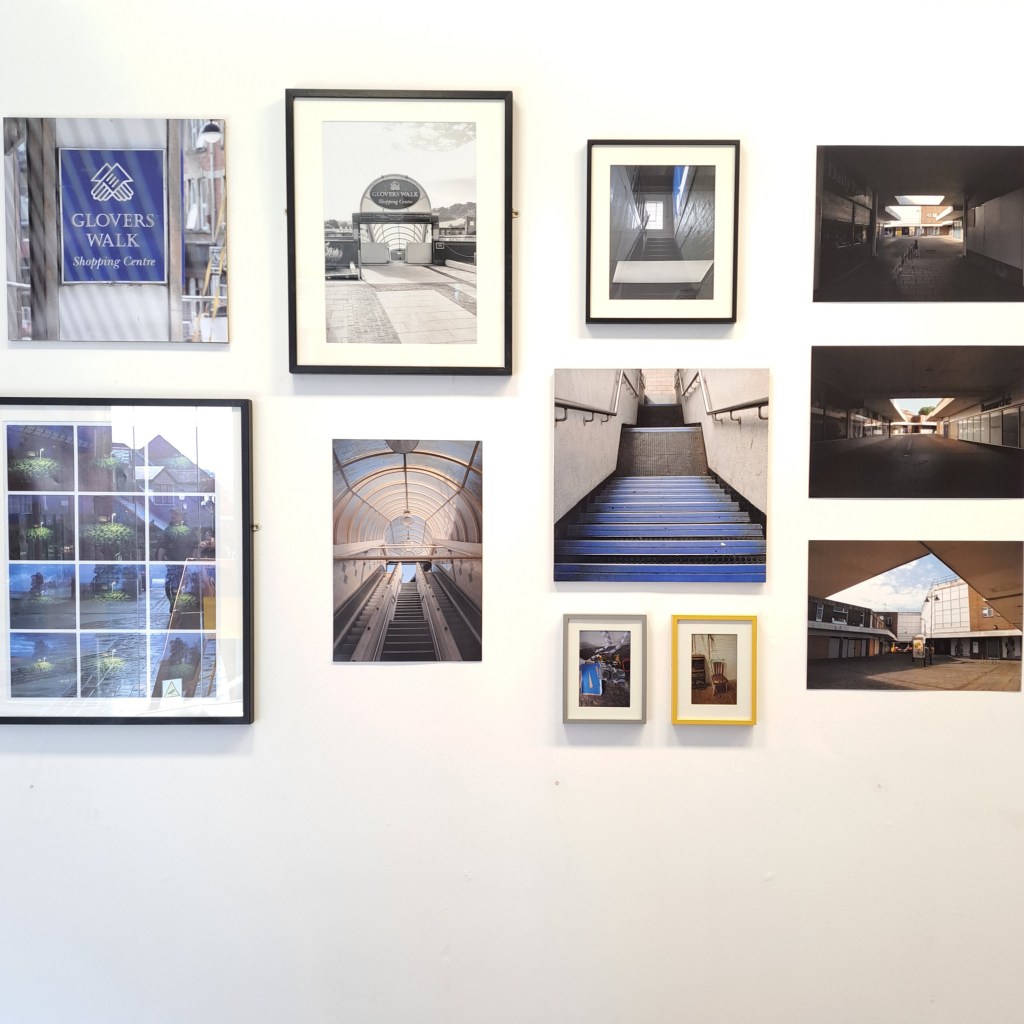
Yeovil Art Space has put together a new exhibition featuring photos and historical archives on Glovers Walk over time, from the glove factories in the Victorian era, to the post-war brutalist architecture, while reimagining the future.
In collaboration with the South Somerset Heritage Collection, this exhibition shows the drawing of the Whitby Glove Factory building and its original site plan, believed to have first mentioned the name ‘Glovers Walk’, dated 1892. According to local historian Bob Osborn, who has conducted extensive research on Glovers Walk, ‘The bulk of the site that would become the Glovers Walk complex was a mass of glove factories and leather dressing yards that were mostly disused by the 1950s.’ During the height of the gloving industry, there were over 30 gloving factories in Yeovil but only a few now survive since the town’s development over the years, especially after its expansion in the ‘60s.
Part of this site occupied The Coronation Hotel & Vaults, which opened in 1902 until it was demolished in 1965 to make way for the new shopping complex precinct. Existing just over 50 years, it was the cornerstone of local social life, with retail space on the ground floor and a public house serving local ale and guest rooms above. It survived the bombing during WWII and no doubt was considered as one of the most prominent, architecturally grand landmarks at the heart of Yeovil’s town centre; in which you can glimpse its glory in the postcard collection shown within the exhibition.
Many will agree that “The ‘50s and ‘60s was a period of dramatic change in post-war British architecture. Indeed, during this time, hardly an English town escaped dual carriageways and massive town centre redevelopment in concrete and prefab tiles – Yeovil was no exception.” Bob Osborn And with that, a new Shopping precinct was built on an over 1.2 acre site, embodying the quasi-Brutalist modernism of its time; this became a key location for retails particularly during the 1980s to ‘90s and is what we know as Glovers Walk. The exhibition features: a selection of photo documentation from local photographers and historian Jack Sweet, shop records from local estate agents, and personal photographs shared by Yeovil residents and visitors.
The exhibition also showcases a photographic record of Glovers Walk by photographer Kirsten Cooke, who was commissioned by Yeovil Art Space in 2024 to capture Glovers Walk prior to the demolition. Kirsten’s photographs focus on the precinct in its entirely empty state; they may seem eerie and desolate on the surface, but they are filled with lingering memories and the hearts of many. Every rusted shutter and blank display window becomes a monument to the shoppers, workers, and the passersbys who once animated Glovers Walk, offering a profound reflection on time, decay, and local history. You will also find photographic documentation of the temporary installation ‘Anything You Can Think Of, Everything You Can Imagine’ by artist duo LOW PROFILE, commissioned in response to the community consultation of the meanwhile use of the site, as well as to inspire plans for the future.
The meanwhile use of Glovers Walk is now underway, including the art and cultural lead partnership project ‘Yeovil Reimagine’, inviting Yeovil residents and visitors to contribute and take part from now until 2028.
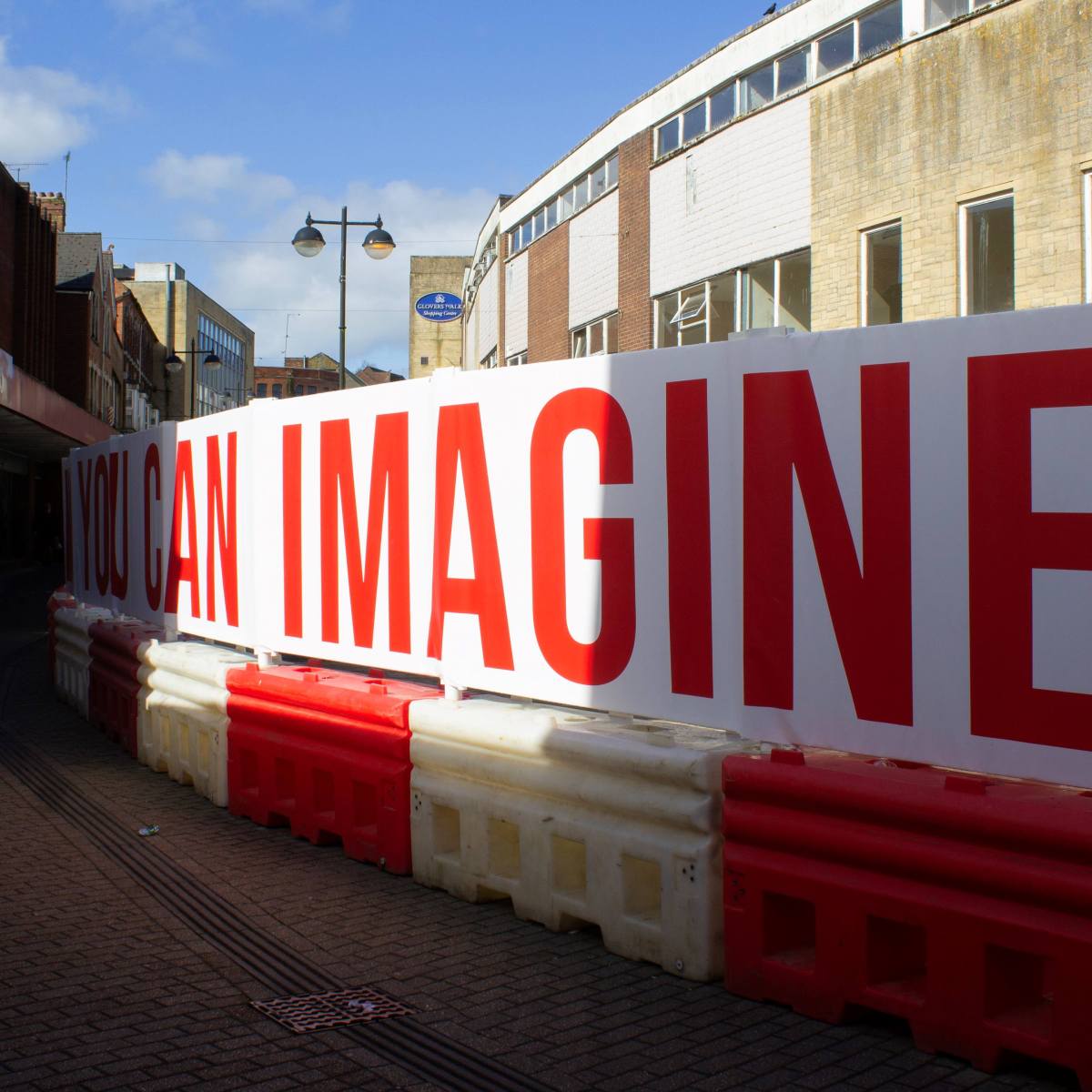
YEOVIL REIMAGINE
Bringing Art and Culture to Everyday Life We are delighted to share news of a very special brand new partnership project happening in Yeovil. Yeovil Reimagine is an exciting 2-year programme brought together by generous funding and support from Arts Council England’s…
READ MORE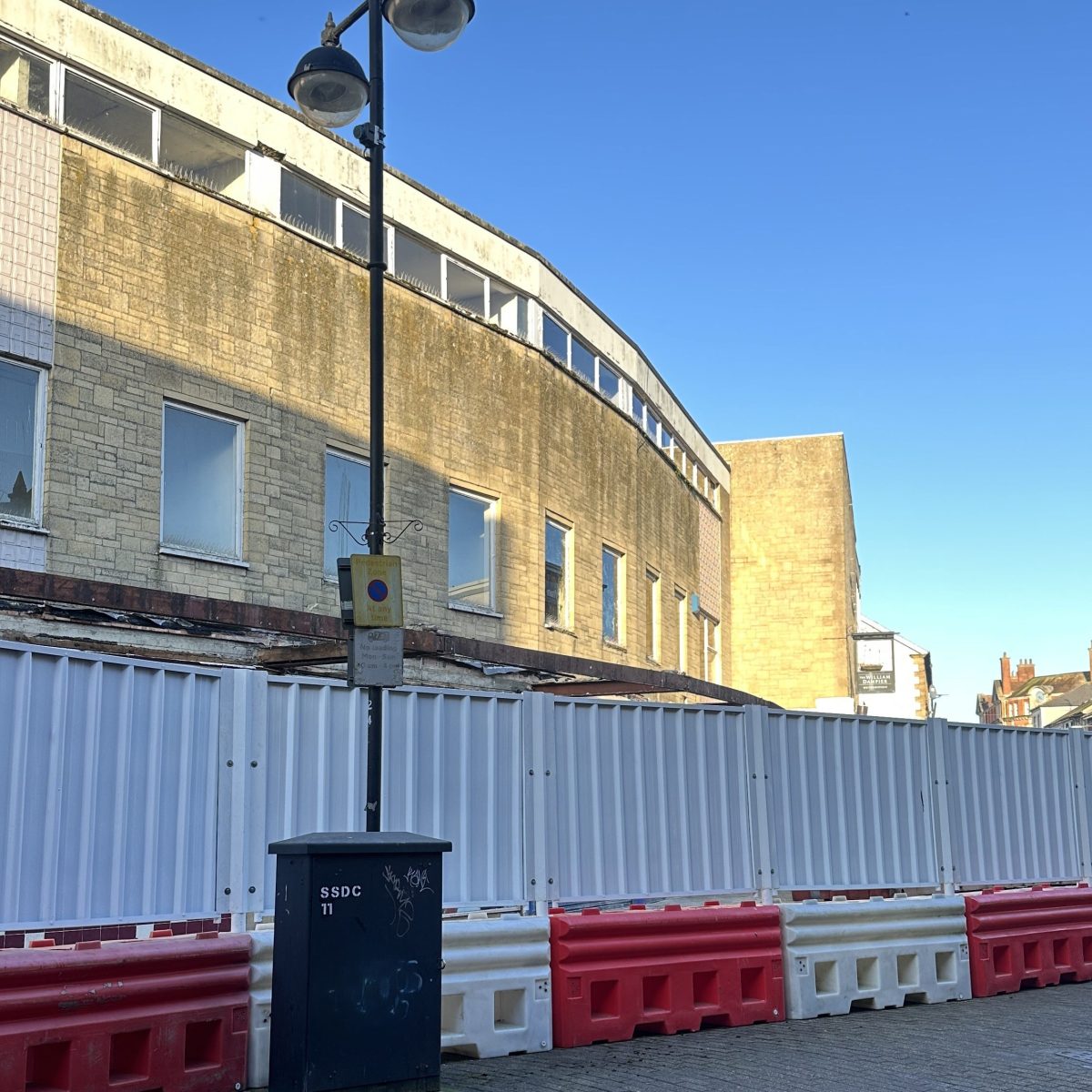
Glovers Walk Hoardings: Bringing Art to a Blank Canvas
The hoardings have been erected whilst the demolition works continue and currently run the length of Lower Middle Street. Somerset Council and Yeovil Art Space have seen the ‘blank canvas’ as an opportunity to respond to the strong call out, via the…
READ MORE
